What Is Imprinted Concrete Driveway?
- shropshirelandscap
- Jul 3
- 6 min read

A driveway can change the way your whole property feels before anyone even steps through the front door. If you have been comparing surfaces and wondering what is imprinted concrete driveway, the short answer is this: it is a poured concrete surface that is coloured, patterned and sealed to look like more expensive materials such as block paving, slate, cobbles or stone.
For many homeowners, that sounds like the best of both worlds. You get the solid feel of concrete, but with a more decorative finish than plain grey slabs. The detail matters though, because an imprinted concrete driveway is only as good as the design, ground preparation and installation behind it.
What is an imprinted concrete driveway?
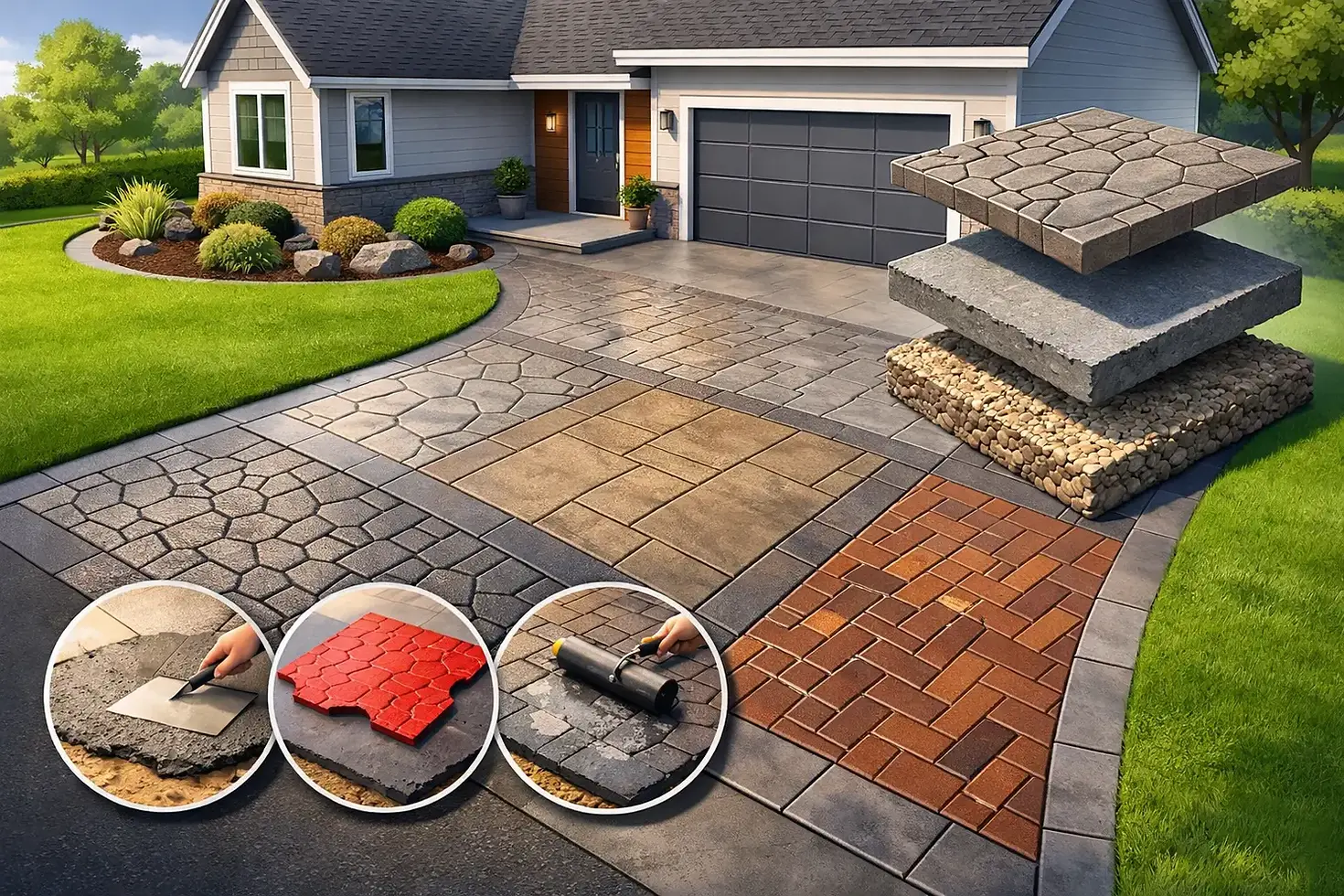
An imprinted concrete driveway is made by pouring fresh concrete over a properly prepared base, adding colour hardener to the surface, and then pressing patterned mats into the concrete before it sets. Those mats create the finished texture and appearance. Once cured, the surface is sealed to protect the colour and help it resist water, oil and general wear.
The result is a single continuous driveway that mimics the look of individual paving units. Popular patterns include brick, ashlar stone, yorkstone, fan designs and cobble effects. This gives homeowners plenty of scope to match the character of the house, whether the property is modern, traditional or somewhere in between.
Because it is one solid slab rather than separate blocks, there are no joints for weeds to push through in the same way they can with block paving. That low-maintenance appeal is one of the reasons imprinted concrete remains a popular choice.
How imprinted concrete driveways are installed
The finished appearance often gets the attention, but the real performance of any driveway starts below the surface. A good installation begins with excavation to the correct depth, followed by a stable sub-base and proper compaction. If the foundation is poor, the decorative finish on top will not compensate for it.
Once the base is in place, edging and levels are set to make sure the driveway works visually and practically. Falls need to be designed properly so water drains in the right direction rather than sitting on the surface or running towards the house. This is one of those areas where experience matters, because even a driveway that looks attractive on day one can become frustrating if drainage has not been properly considered.
The concrete is then poured and levelled. Colour hardener is applied to strengthen and tint the surface, and a release agent is used to prevent the stamping mats from sticking. The pattern is pressed in while the concrete is still workable. After curing, control joints may be cut to help manage cracking, and the driveway is sealed.
That process sounds simple on paper, but timing is critical. Concrete has to be worked at the right stage, especially in changing weather conditions. Too early or too late, and the pattern quality can suffer.
Why homeowners choose this surface
The main attraction is appearance. Imprinted concrete gives a decorative look without the pieced-together finish of some alternative materials. Because it is available in a wide range of patterns and colours, it can be designed to complement the property rather than looking like an afterthought.
It is also valued for being relatively low maintenance. There are no loose blocks to shift and fewer places for weeds to establish themselves. For busy households, that can make a real difference over time.
Durability is another selling point. When installed correctly on a properly prepared base, an imprinted concrete driveway can cope well with regular vehicle traffic. It suits homeowners who want a hardwearing surface with strong kerb appeal and without the ongoing upkeep of more labour-intensive options.
There is also a practical design advantage. Because the concrete is poured in place, it can work well across larger areas and more bespoke layouts. Curves, borders and feature sections can be incorporated as part of the overall design rather than patched in afterwards.
The trade-offs to understand before choosing it
Imprinted concrete is not the right answer for every property. The biggest point to understand is that, while it is durable, it is still concrete. That means cracking can happen. A well-installed driveway should include control measures and proper preparation to reduce the risk, but no reputable installer should pretend the material is completely crack-proof.
Repairs can also be less straightforward than with block paving. If an individual block sinks or gets damaged, it can often be lifted and replaced. With imprinted concrete, patch repairs are more difficult to blend in neatly, especially when colour has weathered over time.
The surface can become slippery if sealing is overdone or if maintenance is neglected and algae builds up. This is manageable with the right sealant and sensible aftercare, but it is worth discussing during the design stage.
Some homeowners also prefer the natural variation of real stone or the modular flexibility of block paving. If you want a driveway with a very traditional or highly textured feel, another material may be a better fit.
What does an imprinted concrete driveway look like?
One of the strongest benefits is the range of finishes available. A well-designed imprinted concrete driveway does not need to look flat or artificial. With the right pattern choice, border detailing and colour combination, it can be tailored to the style of the property and improve the overall frontage.
For example, a period home may suit a more traditional cobble or slate effect in warmer tones, while a newer property may benefit from cleaner stone patterns and a sharper border contrast. The best results come when the driveway is designed as part of the whole front garden, taking into account walls, paths, entrance steps and planting.
That is often where homeowners get better value from a design-led approach. It is not just about picking a pattern from a brochure. It is about choosing a finish that sits comfortably with the house and improves kerb appeal for the long term.
How long does it last?
A professionally installed imprinted concrete driveway can last for many years. Lifespan depends on the quality of the groundworks, the mix used, vehicle load, drainage design and how well the surface is maintained.
The sealer will need refreshing periodically to keep the colour looking its best and to maintain protection. That does not mean the whole driveway needs replacing. It is part of normal upkeep, much like cleaning and occasional maintenance on any premium exterior surface.
If the base is poor or corners are cut during installation, problems usually show up much sooner. Sinking, standing water, surface wear and cracking are rarely just bad luck. More often, they point back to preparation or workmanship.
Is imprinted concrete expensive?
Imprinted concrete usually sits in the mid-to-premium range compared with other driveway options. It is often more expensive than basic gravel but can be competitive with quality block paving, especially when you factor in the decorative finish and lower weed-related maintenance.
The overall cost depends on site access, excavation requirements, drainage, size, pattern choice and edging details. A simple rectangular driveway is not priced the same way as a sloping frontage with retaining work, steps or drainage channels.
The better question is not whether it is cheap, but whether it offers good value for your priorities. If you want a driveway that looks smart, feels solid and requires relatively little day-to-day attention, it can be a worthwhile investment.
Is it right for your home?
If your priority is a neat, durable, low-maintenance driveway with strong visual impact, imprinted concrete is well worth considering. It particularly suits homeowners who want a more decorative finish than plain concrete and do not want the routine weed growth that can come with some jointed surfaces.
It may be less suitable if you want the easiest possible repair option, or if you strongly prefer the authentic texture of individual paving units. This is why the best material choice always depends on the property, the way the space is used and the finish you want to achieve.
For many homes, the decision becomes clearer once the practical questions are answered properly. How many vehicles need to fit? How will water drain? What style matches the house? How much maintenance are you realistically willing to do? These are the details that shape a driveway that still works well years after installation.
A good driveway should do more than cover the ground in front of your home. It should make arrival easier, improve the appearance of the property and feel like a considered part of the wider outdoor space. If you are considering imprinted concrete, the smartest next step is not simply choosing a pattern. It is making sure the design, build quality and finish are all working together from the start.


Comments